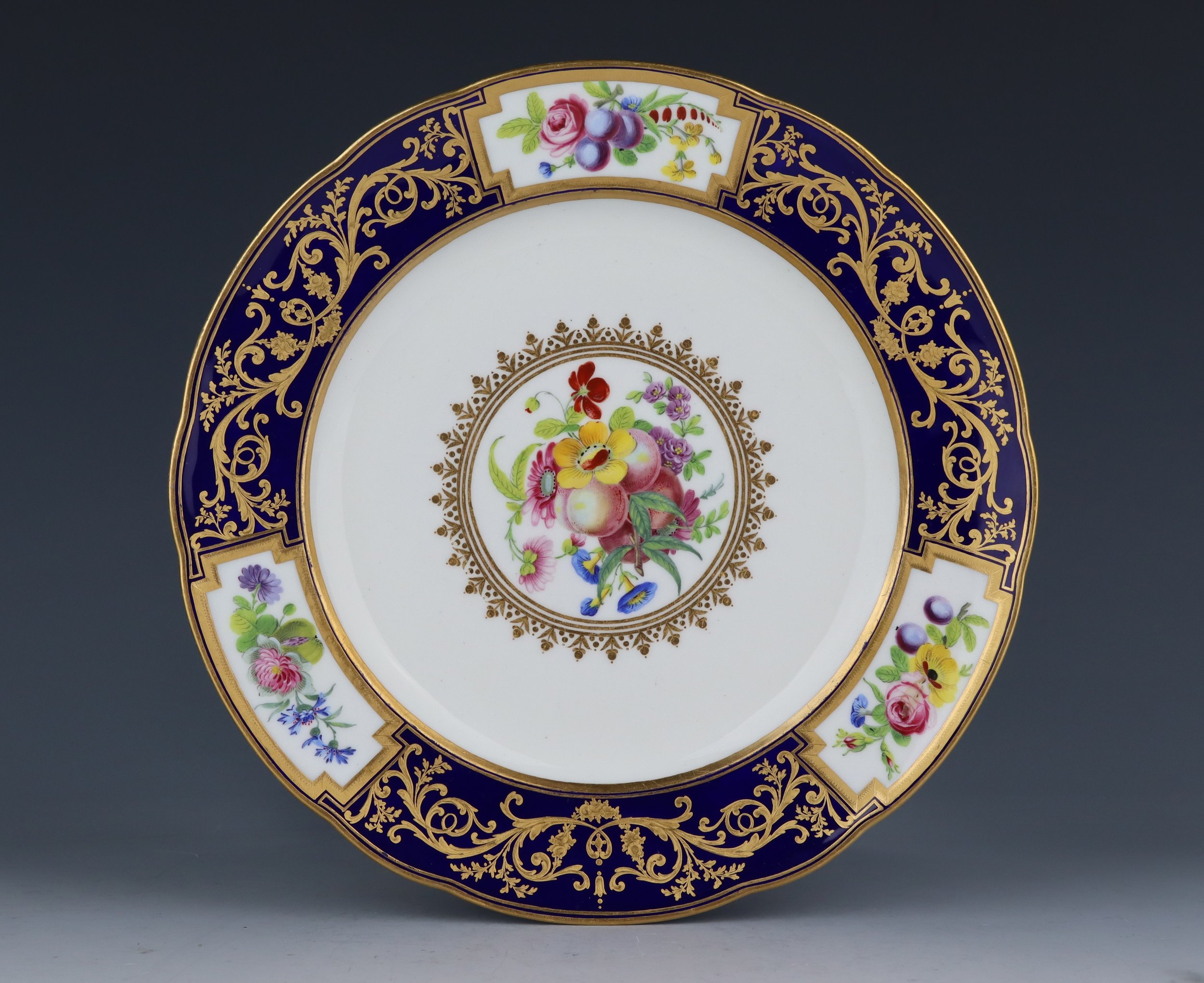
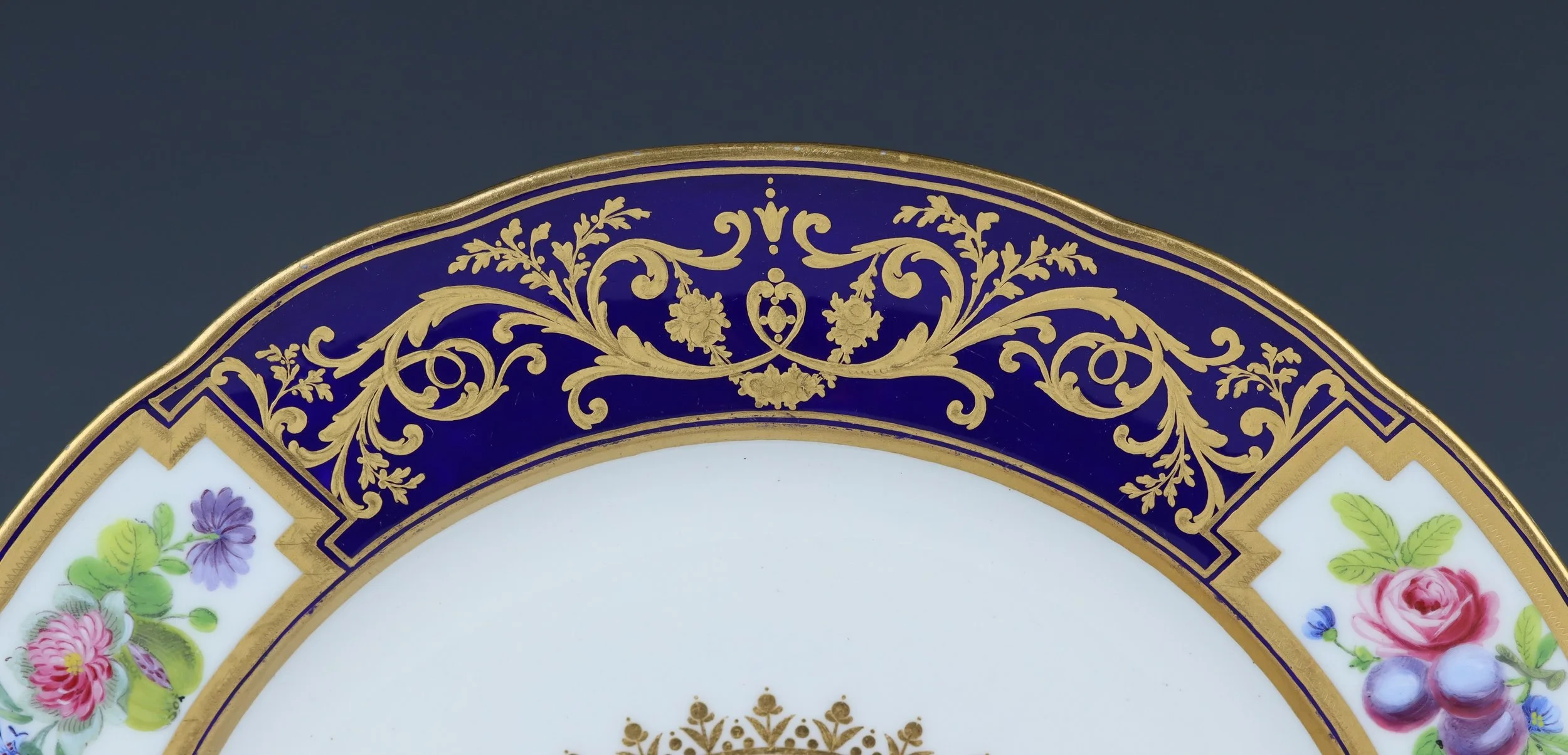
Sèvres plate decorated with rich gilt arabesques on a bleu nouveau ground and panels of flowers, 1787
Ø 23.8 cm
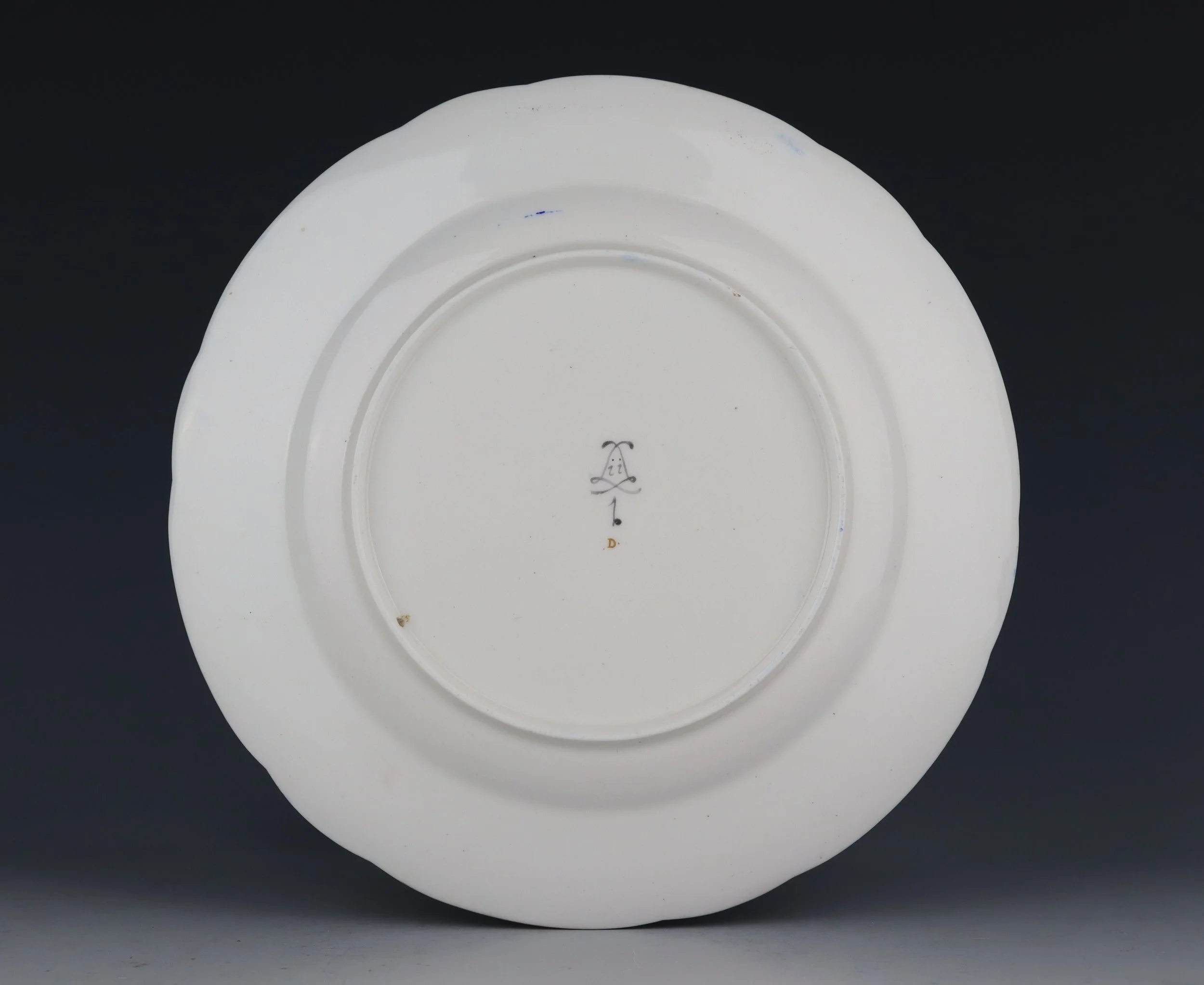
Marked: interlaced Ls, date letter ii for 1787, painter’s mark for Antoine-Toussaint Cornailles (active 1755-1800) and gilders mark for Decambos (active 1776-88)
The conde d’Aranda served as Spanish Ambassador to France from 1773 to 1787. Louis XVI and the Royal Family were on extremely friendly terms with him, and, naturally, at the moment of his departure, the French King decided to give him an especially rich present.
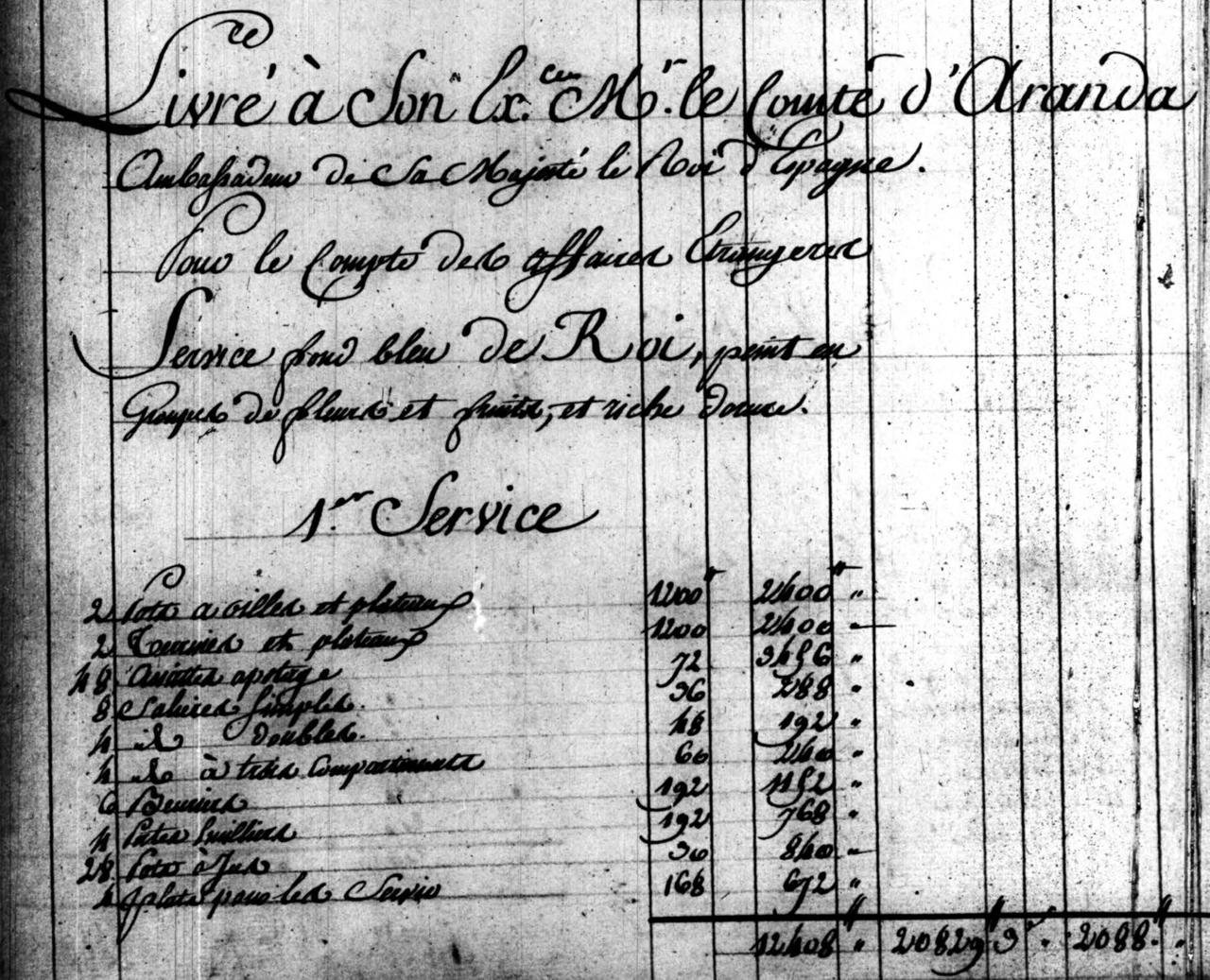
The “registre des présents du Roi” in the ministry of foreign affairs notes the gift of a “service de porcelaine de Sève, fond bleu royal, avec un surtout en groupes, biscuit” at the price of 43,428 livres to the conde d’Aranda, described as a “présent de congé”, with in addition a gold box with a portrait of Louis XVI at the price of 30,892 livres. The register further states that “il a été remis en présent au nom du Roi M. le Cte d’Aranda Ambassadeur de la Cour d’Espagne auprès de Sa Majesté, lors de son départ de France pour retourner à la Cour”.
This service had been specially ordered from the factory, and the comte de Montmorin, minister of foreign affairs, had personally visited Sèvres in June 1787 to inspect the service and its biscuit surtout. On 6 July, Régnier, the factory’s director, wrote in a letter to the comte d’Angiviller, the minister in charge of Sèvres, about the “superbe service beau bleu ou bleu royal groupes de fleurs et fruits arabesques en or, riche, bruny par effets imitant la plus belle ciselure, avec le surtout en groupes et figures biscuits variés”, and adds that the conde d’Aranda has just visited the factory and was shown the service as a surprise. He continues by saying that “M le cte d’Aranda qui n’a paru être aucunement prévenu, a été surpris de la beauté en général et en particulier de chaque pièce”.
A major part of the service subsequently appeared in an auction at Christie’s in London on 11 March 1836, with this description: “A splendid dessert service of the rarest Sèvres porcelain, Bleu du Roy, exquisitely painted with groups of fruits and flowers, purchased at the sale of the property of Don Carlos in his apartments at the Palace of Madrid”.
This early provenance indicates that the service was in the possession of King Charles IV of Spain. It was not rare for an ambassador to give his diplomatic presents to his sovereign, and it appears likely that Aranda gave the service to Charles IV, who acceded to the Spanish throne in 1788, and died in 1819.
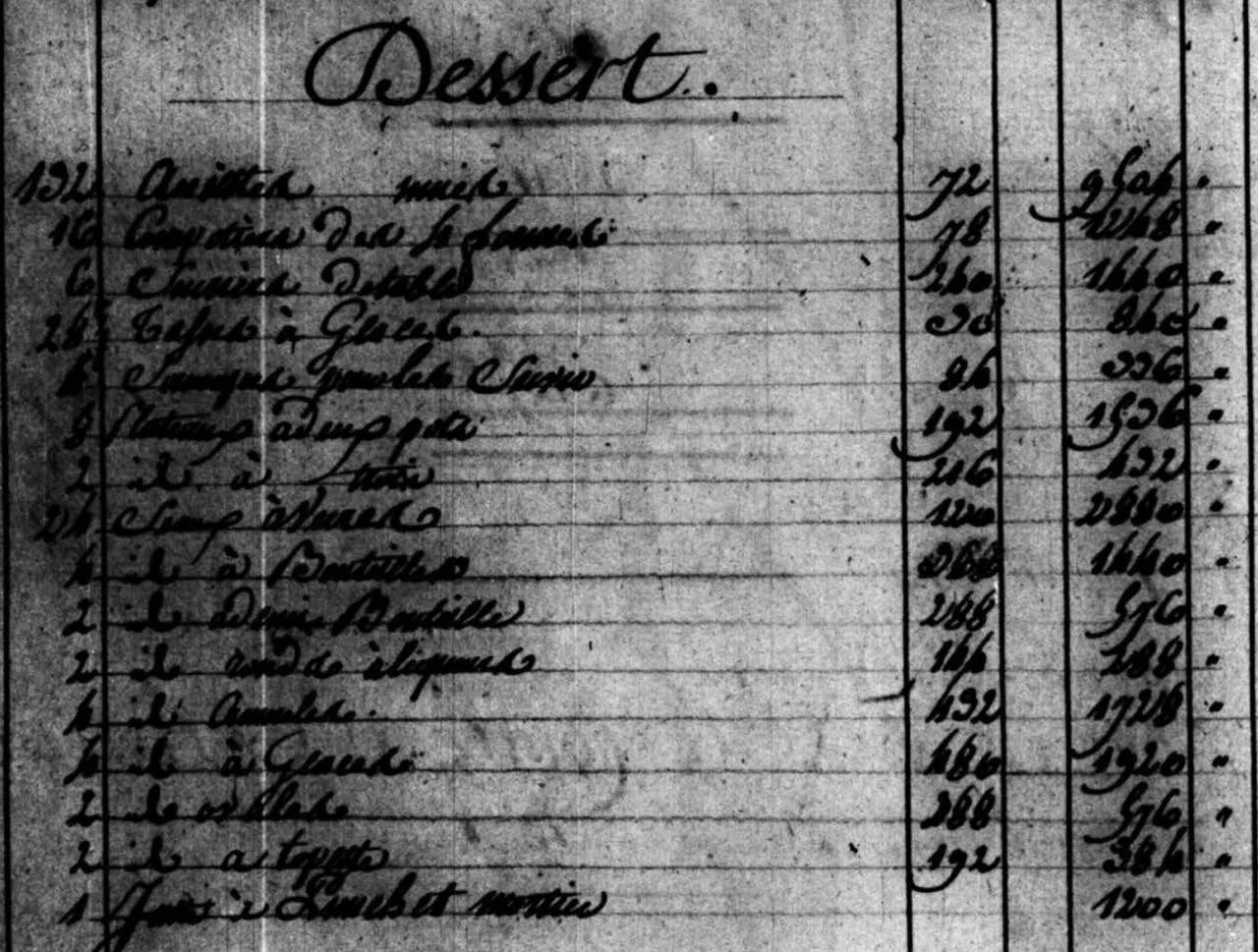
The decoration of the service is particularly lavish, with plates at the high price of 72 livres each. It has the same blue ground and rich arabesque gilding as the service with mythological scenes ordered by Louis XVI and today in the British Royal collection at Windsor.
A few pieces from this service are in public collections: the mortier is in the Decorative Arts Museum in Madrid, a plate and a porte-huilier in the Victoria and Albert Museum, a double jampot in the Musée National de Céramique at Sèvres, a sucrier in the Museo Cerralbo, Madrid.
Provenance: Conde d’Aranda
King Charles IV of Spain
(25244)
€7,500